TECHNOLOGY SEED
- Medical / Life Science Fields
Novel Lipidated cGAMP Derivatives with High Cell Membrane Permeability for STING-Dependent Cancer Immunotherapy
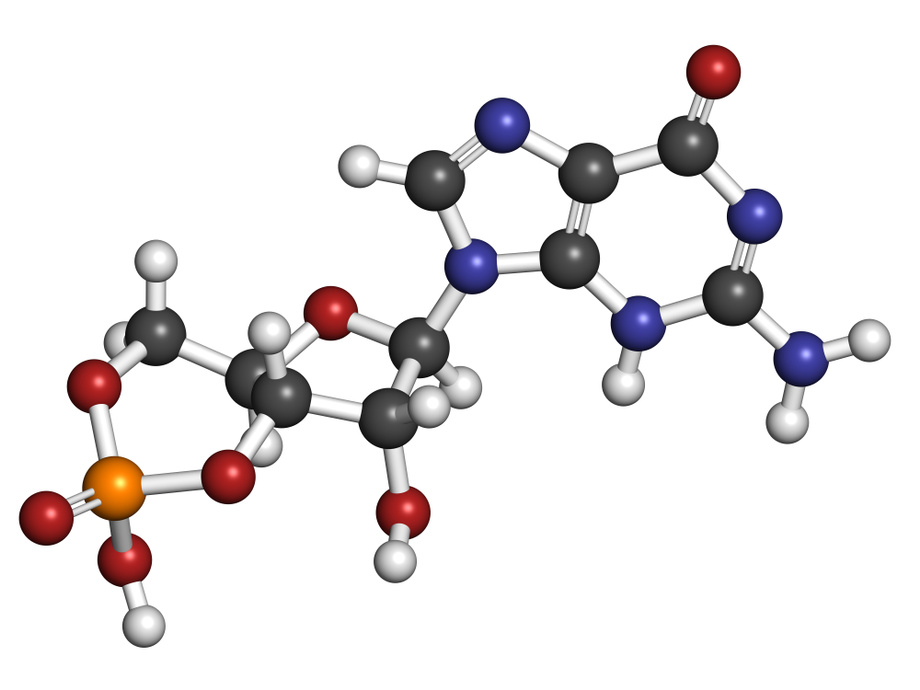
Lipidated cGAMP derivatives with enhanced permeability enable efficient cell entry, potent STING activation and systemic anti-tumor immunity
Source: molekuul.be, stock.adobe.com/uk/60667202, stock.adobe.com
Background
Current STING agonists, such as natural cGAMP, have limited clinical efficacy due to poor cell membrane permeability and low metabolic stability. These limitations prevent sufficient immune activation in tumors, particularly in non-inflamed “cold tumors” that lack T-cell infiltration. As a result, effective cancer immunotherapy requires the development of novel compounds that can overcome these pharmacokinetic and biological challenges.
Technology Overview
Researchers at Hokkaido University, in collaboration with Asahikawa Medical University and Tohoku University, have developed a new class of lipidated cGAMP derivatives designed to enhance membrane permeability and metabolic stability while maintaining potent STING-dependent immune activation. These compounds achieve improved tumor penetration and systemic immune activation, inducing strong anti-tumor responses in preclinical models.
The core innovation involves modifying the cGAMP structure, allowing the compound to cross cell membranes efficiently. Once inside the cell, these substituents are cleaved, releasing active cGAMP to stimulate STING. In vitro studies demonstrated selective TNFα induction in wild-type dendritic cells and human THP1 cells, with no activation in STING-deficient cells. In vivo breast cancer models showed significant tumor growth inhibition at both treated and distant tumor sites, as well as improved survival.
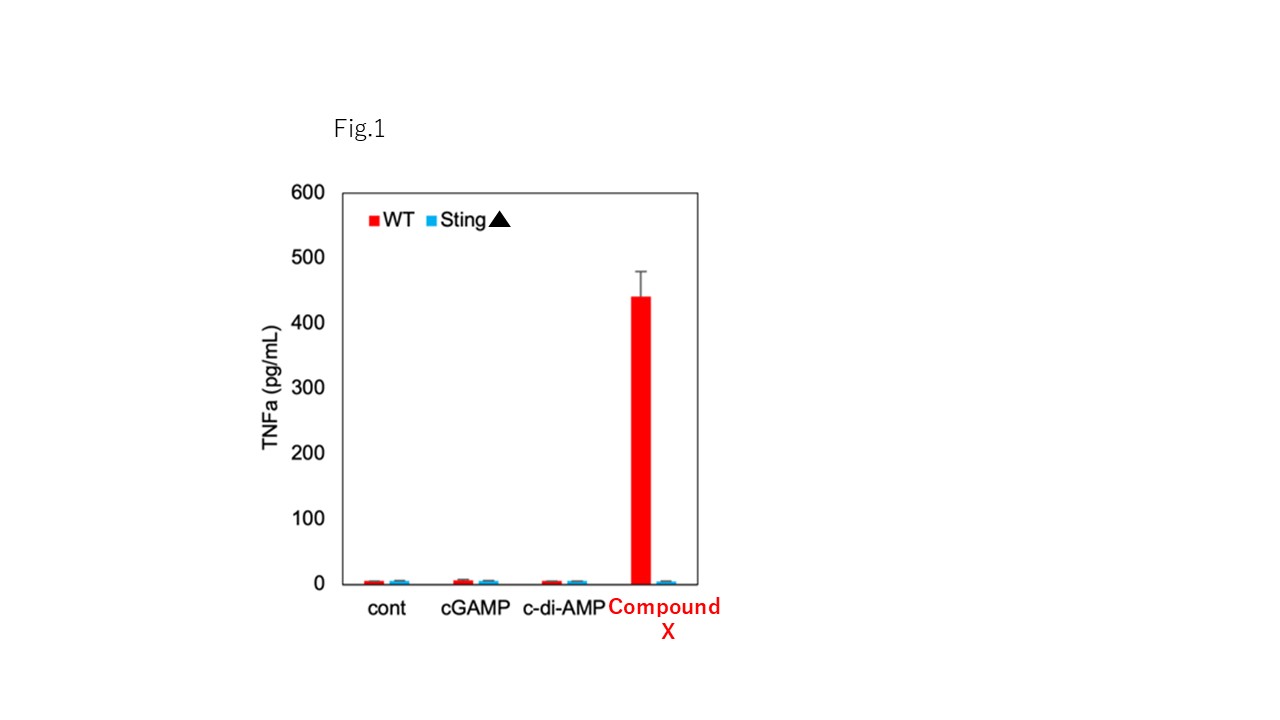
Figure 1.
To evaluate the STING-dependent activity of the lipidated cGAMP derivative Compound X( One of our new derivatives), bone marrow-derived dendritic cells (BMDCs) from wild-type (WT) and STING-deficient (Sting▲) mice were induced and stimulated with 10μM, respectively. TNFα concentration was measured by ELISA. cGAMP and c-di-AMP showed almost no TNFα, whereas Compound X showed TNFα only in WT-BMDCs. Taken together, these results indicate that Compound X activates dendritic cells in a STING-dependent manner.
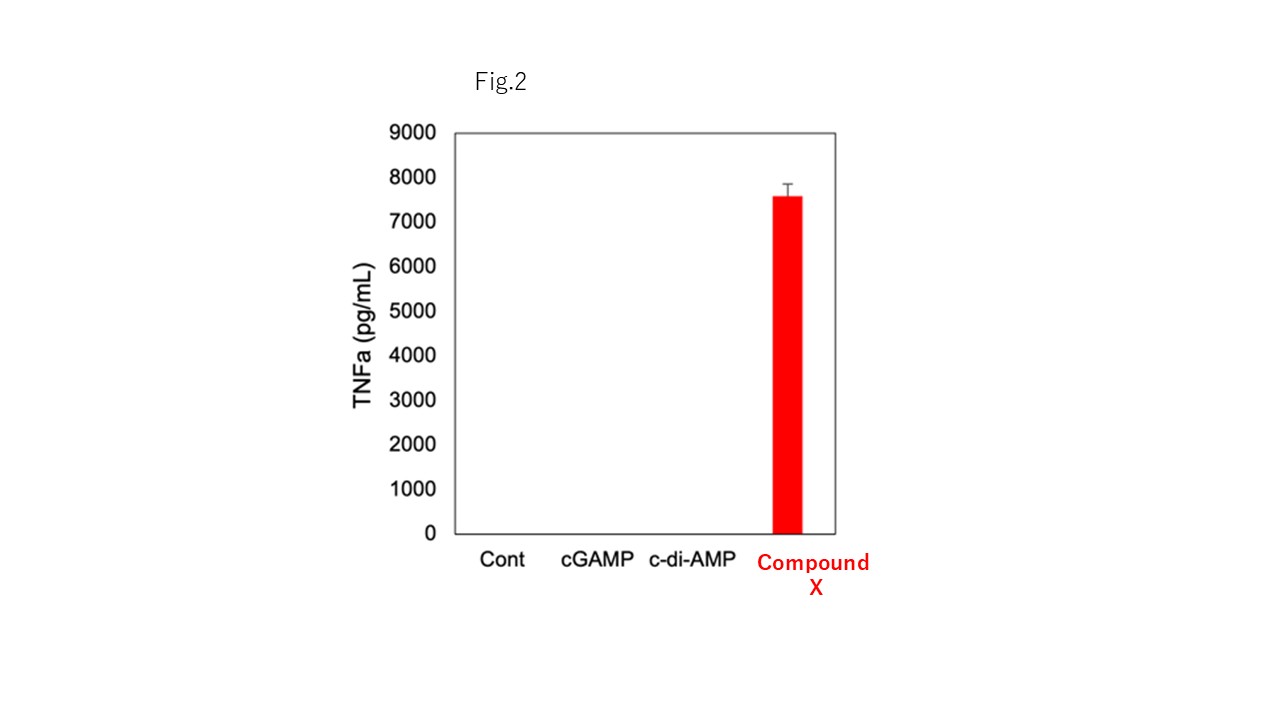
Figure 2.
To evaluate the activity of Compound X on human cells, the human myelomonocytic cell line THP1 was similarly examined. As a result, TNFα was detected in Compound X compared to cGAMP and c-di-AMP, whereas TNFα was hardly detected in cGAMP and c-di-AMP. These results indicate that Compound X is active against human cells.
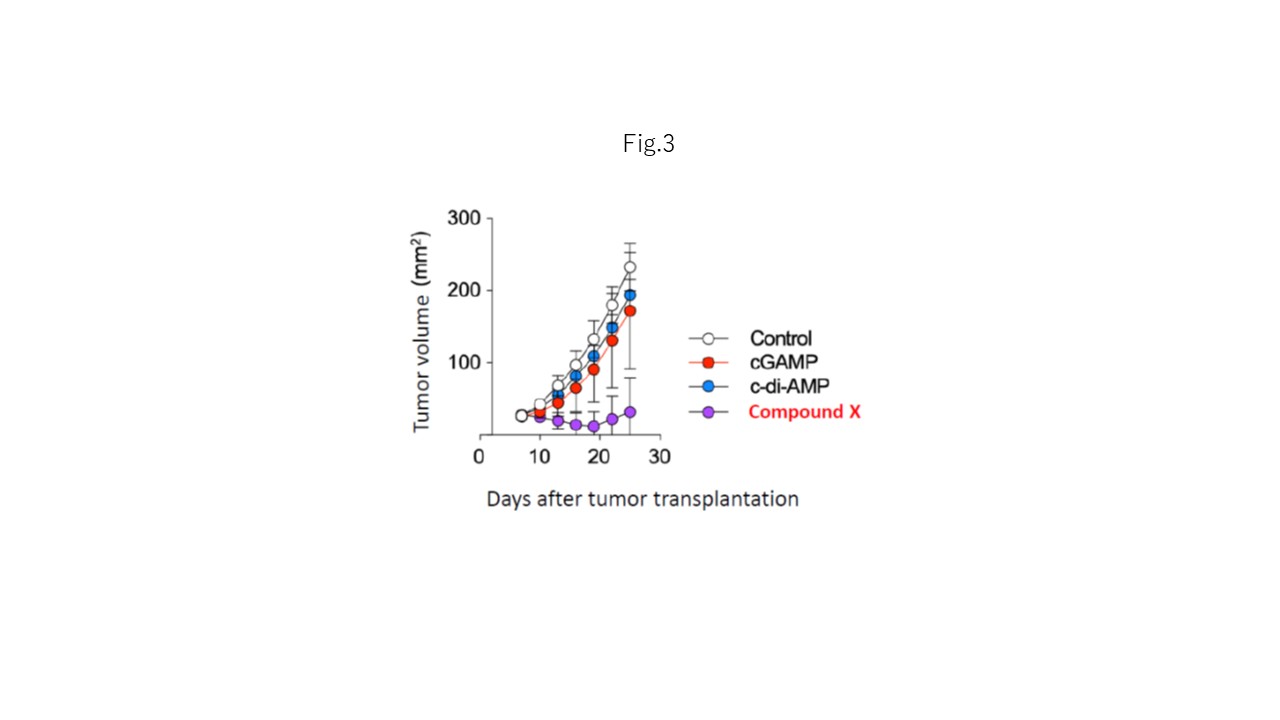
Figure 3.
The antitumor activity of Compound X was evaluated using a mouse breast cancer model. The mouse breast cancer cell line E0771 was transplanted into the mammary gland of wild-type mice, and 1.4 nmol of the compound was administered intratumorally on day 7. The results showed that Compound X inhibited tumor growth to a high degree, whereas cGAMP showed only a slight inhibition of tumor growth. This indicates that Compound X has an antitumor effect in carcinoma-bearing organisms.
Benefits
- High membrane permeability: Lipid modifications overcome the intrinsic negative charge barrier of cGAMP.
- Metabolic stability: Enhanced half-life compared to natural cGAMP.
- Potent STING activation: Strong TNFα production in immune cells.
- Systemic anti-tumor immunity: Effective against both primary and distant tumors.
- Versatility: Potential use as a cancer therapeutic or vaccine adjuvant.
Applications
- Cancer immunotherapy: Especially for non-inflamed “cold tumors.”
- Vaccine adjuvants: Enhancing immune responses in infectious disease and oncology vaccines.
- Combination therapies: Potential synergy with immune checkpoint inhibitors, chemotherapy, or radiotherapy.
Opportunity
Hokkaido University are seeking partners for the clinical development and commercialization of this novel class of STING agonists. Opportunities include co-development agreements, out-licensing, or collaborative research to explore new indications.
Link
inpart
Contact